Feeds RSS

Rabu, 21 Juni 2017

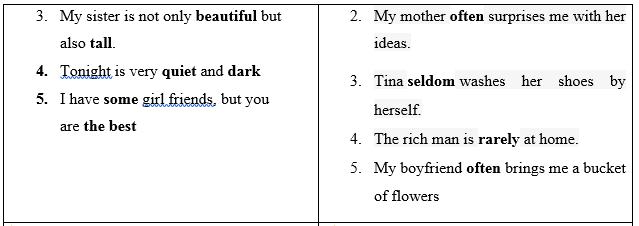
Tugas 4_Bahasa Inggris Bisnis 2_Explain & Example ADJ & ADV

Nama : Lia Khoiriyah
NPM  : 26214053
Kelas  : 3EB31

Hasil gambar untuk kartun belajar adverb   


Sabtu, 13 Mei 2017

Tugas 3_Bahasa Inggris Bisnis 2_Artikel Didalamnya Terdapat IF Conditional Type 1,2 & 3

Nama ; Lia Khoiriyah
NPM  : 26214053
Kelas  : 3EB31


IF Conditional

Rumus Conditional Sentences :
Conditional 1. If + S + Present Tense, S + Future
Conditional 2. If + S + Past Tense, S + Past Future
Conditional 3. If + s + Past Perfect, S + Future Past Perfect


Dibawah ini adalah judul artikel yang mengandung kalimat IF Condition Sentences :

To Go To Zimbabwe Need To Read - U.S. Economic Sanctions Against Zimbabwe

If You Are Planing To Go To Zimbabwe You Need To Read This First - US Economic Sanctions Against Zimbabwe American Hunters considering traveling to Zimbabwe need to read and familiarize themselves with the issued Treasury Department's Office of Foreign Assets Control (OFAC) .

If I were Prime Minister, I’d privatise the NHS. This Executive Order prohibits US persons, wherever located, or anyone in the United States from engaging in any transactions with any person, entity or organization found on this list which is compiled and regularly updated by The US Treasury Department's Office of Foreign Assets Control (OFAC).

This list also names properties where American hunters are forbidden to hunt legally. No American should have any dealing with anyone on this list. For more information please visit the website of the US Treasury Department's Office of Foreign Assets Control by clicking here.

If you’d been here earlier, you could have had it provides a fact sheet with general information about the Zimbabwe sanctions program imposed by the new Executive Order. For the search result of OFAC's SDN ( Specially Designated Nationals)

List Zimbabwe And that at no time will you be hunting on a sanction listed property. Criminal fines for violating the Executive Order or regulations to be issued pursuant to the Executive Order are severe. It is no guarantee of protection against prosecution.


Dari Artikel diatas, terdapat If Conditional yaitu :
1.  Conditional type 1 terdapat di paragraph 1 (Satu) yaitu :
If You Are Planing To Go To Zimbabwe You Need To Read
2.  Conditional type 2 terdapat di paragraph 2 (Dua) yaitu :
If I were Prime Minister, I’d privatise the NHS
3.  Conditional type 3 terdapat di paragraph 4 (Empat) yaitu :
If you’d been here earlier, you could have had it provides a fact


Sumber:

Dicoppy : Jam 09:11, Hari Minggu, 14 Mei 2017.


Rabu, 19 April 2017

Tugas2_Bahasa Inggris Bisnis 2_Modal

Nama : Lia Khoiriyah
NPM : 262140553
Kelas : 3EB31

Modal (modalitas) adalah bentuk kata yang membantu kata kerja. Modal harus disandingkan dengan verbs. Oleh karenanya, modal juga sering dinamakan kata kerja ganti.


THE KINDS OF MODALS (JENIS-JENIS MODAL)
Secara garis besar. modal dibagi menjadi dua, yaitu modals present dan modals past. Perhatikan tabel berikut ini.
Modals Present
Modals Past
Can (bisa)
Could
Will (akan)
Would
Shall (akan)
Should
May (boleh)
Might
Must
Had to
Should (harus/Sebaiknya)
-
Ought to (harus/Sebaiknya)
-

Catatan :
Selain contoh modal di atas. ada beberapa kata yang juga memiliki makna yang sama, seperti :
Can/could : be capable of. be able to. manage to
Will/shall : he doing to, be about to
May/might : perhaps, probable, possible, presumable bad better, be supposed to
*Yang dimaksud dengan be adalah to be seperti: is, am. are, was, dan were

1.  CAN/COULD—(Be) able to
FUNGSI (FUNCTION)
“Can” dapat berfungsi menyatakan Kemungkinan dan kemampuan (possibility and ability). Menggunakan “Can” jika Anda pada kondisi dapat/ bisa melakukan sesuatu pada waktu luang (free time) atau bisa/ dapat untuk situasi umum.
“Could” dapat berfungsi menyatakan Kemungkinan dan kemampuan di masa lampau (possibility and ability in the past). Menyatakan “dapat/bisa” pada masa lampau.
 “Be able to” bukanlah merupakan modal seperti “Can” dan “Could”, tetapi merupakan kata kerja “Be” yang ditambahkan kata sifat “able” dan diikuti oleh kata kerja bentuk “to” atau sering Anda dengar dengan sebutan “Verb to infinitive”.

PERBEDAAN (DIFFERENCE)
“Be able to” berfungsi untuk menyatakan kemampuan atau ability yang dimana artinya memiliki kemampuan yang lebih, lebih spesifik. Sedangkan can dan could untuk mengungkapkan kemungkinan (possibility) tingkat kepastian untuk can kurang dari 50% could digunakan dalam situasi formal dan sopan, sedangkan can dalam situasi informal (biasanya untuk teman).

CONTOH (EXAMPLE)


Can
·         Can Call You If I have finished my work.
·         Can I use your phone?
·         can cook very well.
Could
·         I could read the book more faster than you yesterday.
·         My brother wishes he could have owned a house when he was twenty-five years old.
·         Could you please tell me where the nearest bank is?
Be able to
·         She has been able to sing when she was 4 years old
·         I’m able to work independently and in a team.
    Catatan: Dalam kasus permohonan. could lebih sopan dari- pada can

2.  MAY-MIGHT
FUNGSI (FUNCTION)
“May” untuk menyatakan possibility (kemungkinan) dimasa sekarang (present) dan masa depan (future).
“Might” sama seperti  may , modal verb ini digunakan untuk menyatakan possibility (kemungkinan) dimasa sekarang (present) dan masa depan (future) have untuk Menyatakan Probabilitydimasa lalu (past). Modal verb ini digunakan untuk menyatakan hypothetical situation yang terbukti tidak terjadi, lain halnya dengan may yang belum terbukti

CONTOH (EXAMPLE)


May
·         They may arrive here at 7 pm today. 
            ·         If I go there, I may come to his house
Might 
          ·        You might forget the embarassing accident tomorrow.
           ·          They might teach us if they came on time

3.  MUST – (Has/Have to) – (Had to)
FUNGSI (FUNCTION)
“Must” digunakan pada saat Anda ingin menunjukkan bahwa sesuatu yang dimaksud benar adanya dan logis. Selain itu ‘Must’ dapat digunakan untuk menunjukkan kewajiban yang begitu kuat atau kewajiban yang diperlukan menurut diri sendiri dan orang di sekitar
Has/Have to” digunakan untuk mengekspresikan kewajiban yang kuat karena ada campur tangan dari pihak luar yang membuat adanya kewajiban tersebut.
“Had to” Untuk menyatakan keharusan di masa lampau

PERBEDAAN (DIFFERENCE)
Tingkat kepastian untuk must 95%, has/have to digunakan untuk menyatakan keharusan di masa sekarang. Sedangkan Had to Untuk menyatakan keharusan di masa lampau

CONTOH (EXAMPLE)

Must
·         I must work harder to achieve my goals.
·         We must stop complaining about our life.can cook very well.
·         Must you buy a phone every year?
Has/Have to
·         She has to deliver excellent customer service..
·         They sometimes have to work on Saturday.
·         Do you have to speak English at work?
Had to
·         I had to see the dentist every 4-6 weeks.
·         had to buy that trousers

4.  SHALL – SHOULD – OUGT TO
FUNGSI (FUNCTION)
“Shall” untuk menyatakan simple future seperti halnya will namun hanya digunakan pada first person (orang pertama) I dan we jarang digunakan selain untuk polite question untuk first person.  untuk menyatakan obligation (kewajiban) pada formal situation (yang dapat berupa legal document maupun pada saat meeting. Pada situasi ini, baik second maupun third person dapat digunakan dengan modal verb ini.
Should” untuk memberi suggestion (saran) atau advice (nasehat).
Ougt to” digunakan untuk menyatakan apa yang benar atau tepat

PERBEDAAN (DIFFERENCE)
Shall hanya memberikan sebuah nasihat atau saran saja dan should dibanding ought to lebih kuat dalam memberikan nasihat.

CONTOH (EXAMPLE)

Shall
·         I must work harder to achieve my goals.
·         The Human Resource manager shall report the employee performanceWe shall overcome it someday
Should
·         We should meet more often..
·         You should see the doctor.
Ougt to
·         I ought to wear high quality running shoes.
·         We ought to select the best candidate for the job.


5.  WILL – WOULD – (Be) Going to
FUNGSI (FUNCTION)
“Will” untuk menyatakan willingness (kemauan), maupun invitation (undangan/ajakan), membuat keputusan secara spontan/tanpa rencana dan untuk membuat prediksi.
Would” digunakan untuk menyatakan (kemauan), namun lebih polite (sopan), menyatakan kemungkinan dan untuk menyatakan tindakan yang ingin dilakukan dimasa lalu.
(Be) Going to” digunakan untuk menyatakan apa yang benar atau tepat

PERBEDAAN (DIFFERENCE)
Will lebih menyatakan kemauan ataupun ajakan dan lebih spontan dalam membuat keputusan tanpa rencana dan untuk membuat prediksi sedangkan would sama artinya dengan will namun digunkan untuk menyatakan tindakan yang ingin dilakukan dimasa lalu sedangkan (Be) Going to lebih menyatakan apa yang benar terjadi.

CONTOH (EXAMPLE) 

Will
·         Will you marry me?
·         The sandstorm will come tonight.
Would
·         Would you like to see my craft?
·         If you had remembered to invite me, I wouldhave attended your party
(Be) Going to
·         I am going to have holiday in Hongkong
·         The year 2222 is going to be a very interesting year.